J.C. Penney Faces Significant Market Share Challenges as Second Quarter Results Trail Retail Peers

The retail landscape in 2026 continues to present a bifurcated reality for legacy department store operators, and J.C. Penney’s second-quarter financial performance underscores the persistent friction between modernization efforts and consumer demand. While competitors such as Dillard’s and Macy’s have navigated the current macroeconomic climate with modest top-line growth, J.C. Penney has struggled to maintain momentum. For the first half of 2026, the company reported a 6.5% decline in total net sales, a figure that places it at the lower end of the retail sector’s performance spectrum.
The Competitive Landscape and Market Positioning
The discrepancy between J.C. Penney and its rivals is becoming increasingly pronounced. Industry analysis indicates that while the broader department store segment experienced growth during the second quarter, J.C. Penney’s failure to capture a similar share of consumer spending suggests an ongoing erosion of its competitive standing. Neil Saunders, managing director of GlobalData, noted that the retailer’s sales trajectory is particularly concerning given the general health of the sector during the same period.
In contrast, Kohl’s managed to contain its sales decline to under 1%, while Macy’s and Dillard’s leveraged specific strategic maneuvers—such as reinvesting tariff refunds and optimizing gross margins—to secure gains. For J.C. Penney, the struggle remains rooted in a lack of consistent execution across its diverse departments. The retailer attributed its Q2 performance to a confluence of internal and external factors, including lower unit inventory levels, gaps in product availability, and softer consumer demand within seasonal apparel categories.
A Chronology of Transformation: From Sephora to the Present
To understand J.C. Penney’s current position, one must look at the structural changes the company has undergone over the last four years. A pivotal moment in the retailer’s history was the 2020 decision to terminate its long-standing shop-in-shop partnership with Sephora. At the time, the loss of the prestige beauty brand was widely viewed as a major blow to the department store’s foot traffic and demographic appeal.
Sephora subsequently transitioned its retail footprint to Kohl’s. However, the irony of the situation has become apparent in recent quarters, as the Sephora partnership has proven to be a double-edged sword for Kohl’s, occasionally acting as a drag on sales rather than the primary driver of growth that was initially anticipated.
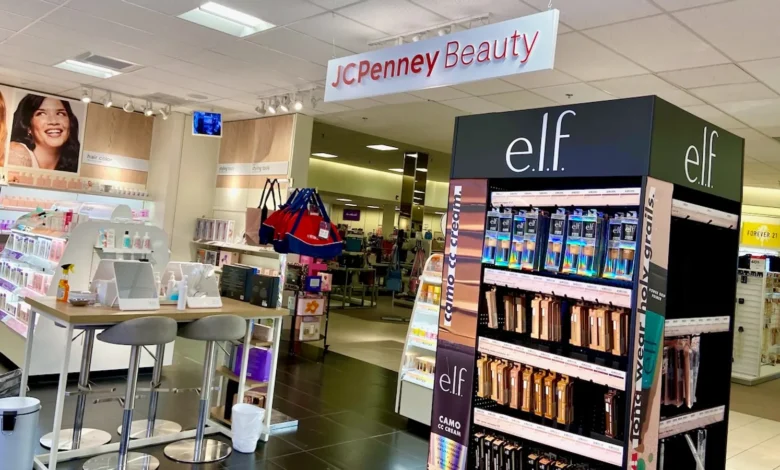
J.C. Penney, meanwhile, has spent the intervening years attempting to curate a proprietary beauty strategy. The company’s recent earnings report highlighted growth in skin care and the introduction of new color cosmetic lines, such as Milani and various K-beauty brands. Industry observers have credited the retailer with taking a thoughtful approach to rebuilding its beauty category, effectively replacing the void left by Sephora with a more modern, diverse product offering.
Identifying Bright Spots and Operational Pockets of Success
Despite the broader sales slump, J.C. Penney has demonstrated resilience in specific categories. Active apparel emerged as a clear standout in the second quarter, recording a 12% year-over-year increase. This success was driven by strategic partnerships with athletic powerhouses like Nike and Adidas, alongside effective merchandising campaigns tied to the World Cup.
Beyond apparel, the retailer saw robust growth in several high-ticket and service-based categories:
- Furniture: Reported a significant 41% increase, suggesting that home improvement and renovation spending remains a viable channel for the brand.
- Jewelry: Experienced a 9% growth rate, indicating that consumers continue to view the retailer as a destination for discretionary, high-value gifts.
- Salon Services: Posted a 7% increase, benefiting from a hybrid model that combines retail product sales with in-store service appointments.
These disparate successes highlight the "cylinder" problem identified by retail analysts. For a department store to function effectively, it requires high performance across its entire product mix. When one or two departments excel while others—specifically the core apparel business—languish, the resulting impact on the bottom line is diluted.
Ownership Dynamics and Financial Stability
One of the most unique aspects of J.C. Penney’s current situation is its ownership structure. Following its financial restructuring, the company was acquired by its primary landlords, including Simon Property Group and Brookfield Asset Management. This unique arrangement removes much of the traditional pressure that leads to mass store closures. While other retailers might shutter underperforming locations to preserve capital, J.C. Penney’s landlords have a vested interest in the long-term viability of the physical stores.
Furthermore, the company’s integration into the Catalyst Brands portfolio provides a layer of operational and financial security that is absent in many other retail turnarounds. Unlike the slow, managed decline seen in legacy chains like Sears, J.C. Penney is benefiting from active capital investment and a strategic mandate to rebuild its brand equity. As Neil Saunders pointed out, the company is "not being run into the ground"; rather, it is in the midst of a complex, long-term rehabilitation.
Strategic Initiatives: Marketplace and Holiday Outlook
In an effort to diversify its revenue streams, J.C. Penney launched a new online marketplace late in the second quarter. Early performance metrics have exceeded internal expectations, leading the company to project that the marketplace will serve as a long-term engine for incremental e-commerce growth. By expanding its digital assortment without the overhead of physical inventory, the company hopes to capture a wider share of the e-commerce market.
Looking toward the remainder of the year, the retailer’s leadership has signaled a commitment to "value-focused pricing activities." The upcoming holiday season will serve as a critical test for these strategies. J.C. Penney plans to emphasize family-centric marketing and transparent value propositions. Given the volatility of the current consumer environment, the retailer has also indicated it will maintain a high level of agility, monitoring customer responses in real-time to adjust its inventory and promotional strategies accordingly.
Broader Implications for the Department Store Sector
The challenges facing J.C. Penney are emblematic of the broader struggle to redefine the department store in the digital age. As consumers increasingly split their spending between specialized direct-to-consumer brands, massive e-commerce marketplaces, and off-price retailers, the "middle-of-the-road" department store must offer a compelling reason for shoppers to return to the store floor.
The implications of J.C. Penney’s Q2 performance are twofold. First, it highlights that even with financial backing and a stable ownership structure, operational execution remains the primary hurdle. Improving supply chain efficiency and maintaining consistent in-stock levels are no longer optional—they are prerequisites for survival. Second, the company’s success in specific categories like activewear and furniture proves that the store still holds relevance for a specific segment of the population, provided the product assortment is relevant and competitively priced.
Ultimately, J.C. Penney’s path forward will depend on its ability to synchronize its various departments. While the backing of Catalyst Brands ensures that the company will not disappear in the immediate future, the pressure to regain market share is mounting. Whether the newly launched marketplace and a refreshed beauty category can provide enough lift to offset the softness in apparel will be the central question for the retailer as it heads into the fiscal year-end.
For now, the brand remains a case study in institutional resilience. By avoiding the pitfalls of bankruptcy-led liquidation and opting for a slow, capital-intensive recovery, J.C. Penney is attempting a path that few in the industry have successfully navigated. The coming months will be telling as to whether this strategy of incremental improvement and strategic partnership is sufficient to return the retail giant to a position of competitive strength in an increasingly unforgiving market.